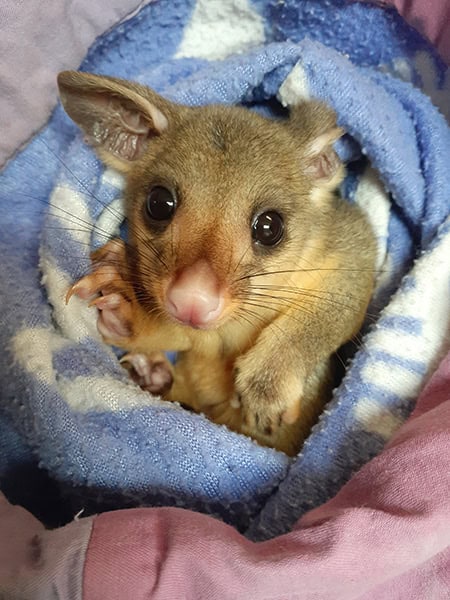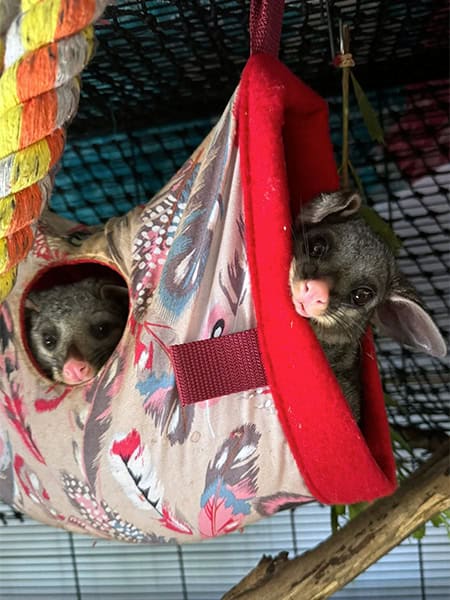
Every year, Wildlife ARC cares for orphaned and injured possums that need time, safety, and dedicated support before they can return to the wild.
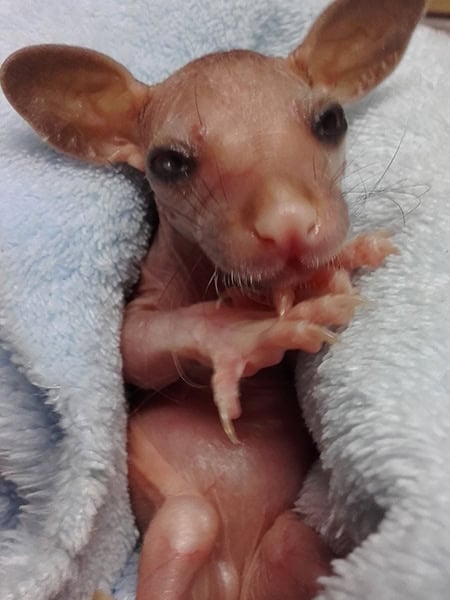
Some arrive as tiny pinkies, like little Teddy, who was found in his mother’s pouch after she was hit by a car. Thanks to a kind passer-by who stopped to check, his life was saved. From there, his journey continued in care, where he was raised, fed, and given the chance to grow strong enough for release.
For possums like Teddy, rehabilitation is not a quick process. Many spend more than a year in care before they’re ready. During that time, they develop the strength, skills, and independence they need to survive in the wild.
When the time comes, release is carefully planned. Possums are introduced into suitable natural bushland, where a possum box is installed to provide safe shelter. They’re also supported with simple supplementary feeding, such as pieces of apple or carrot, while they settle into their new environment and begin foraging independently.
This final stage is just as important as their time in care, and it relies on something we’re always in need of. The right release locations.
As we move into our winter release program, we’re continuing to assess and earmark suitable sites across the NSW Central Coast. Properties with natural bushland, established native trees, and some undergrowth provide the best chance for a successful transition back to the wild.
An ideal tree for a possum box has a strong, upright trunk with a right-angled branch around 3 to 4 metres off the ground. Our team installs the box securely, and carers provide guidance on simple support feeding while the possum settles in.
If you have a property that might be suitable, you could play a direct role in giving a rescued possum a second chance at life in the wild.
If this sounds like something you can help with, we’d love to hear from you.
Please contact us with a few details about your property and where you’re located and we’ll be in touch as soon as we can.